Go Browser - Safe & Fast
- 4.8
- Rating
- 500.00K
- Installs
- Free
- Price

 Analysis by App-foxy
Go Browser - Safe & Fast is the kind of tool I would try when I want fewer separate apps involved in a normal browsing session. It combines web browsing and video playback in one mobile app, while putting privacy into the same general experience. That sounds simple, but the practical question is whether the combination feels comfortable when I move between ordinary pages, media, and more private searches.
After spending time with it, my impression is that its strongest appeal is convenience rather than a long list of advanced browser controls. I can open a page, watch a video, and continue browsing without treating those tasks as completely separate activities. For someone who prefers a compact setup on a phone, that focus makes sense. For someone who already relies on a highly specialized browser, password manager, media app, and synchronization system, the decision is less obvious.
The app is free, belongs to the Tools category, and is made by design.studio.june. Its store presence shows a 4.8 average from around 20 thousand ratings, with more than 500 thousand installs. Those figures suggest that the straightforward browser-and-video idea has found an audience, although popularity alone does not tell me whether it will suit every device or browsing habit.
You May Also Like

 Blood Strike: 2.5 Anniversary
Blood Strike’s Loadouts Turn Every Drop Into a Tactical Gamble
A close look at Blood Strike’s custom loadouts: how fast access to signature weapons reshapes its battle royale rhythm, rewards preparation, and narrows the gap between fights.

 Pandora - Music & Podcasts
Pandora’s Music Is Easy to Start, but Harder to Recover
Pandora’s strength is its low-effort path from a seed to a station. Its weak spot is how much confidence it asks you to place in connection, setup, and quiet recovery.

 8 Ball Pool
 Is Built on Rivalries, Rematches, and Routine
A close look at the rivalries, rematches, shared routines, and unanswered safety questions that turn a quick pool match into a persistent mobile community.

 Samsung Music
’s Quiet Strength Is Playing What You Already Own
Its reach comes less from spectacle than from dependable access to a personal library. That simplicity is both the app’s strongest retention engine and its ceiling.

 AccuWeather: Weather Radar
AccuWeather Review: A Quick, Clear Forecast for Everyday Decisions
For everyday plans, the best forecast is the one you can understand quickly. AccuWeather makes rain timing, radar, and local conditions easy to act on, with a few trade-offs.

 Hill Climb Racing
Why Hill Climb Racing Still Turns Crashes Into One More Run
A tiny car, a bumpy hill and one more upgrade: Hill Climb Racing keeps resurfacing because its simple chaos makes every near-miss feel personal.
More From Our News Desk



How Go Browser feels during ordinary browsing
My first test for any mobile browser is not a demanding website. It is the small sequence most people repeat throughout the day: open a search, read an article, return to the results, switch to another page, and perhaps play a short video. Go Browser is aimed directly at that routine. The interface feels easier to understand when I treat it as a practical gateway to the web instead of expecting it to replace every specialist tool on my phone.
The combined video function is particularly useful when I am researching something that includes both written instructions and demonstrations. I can look up a recipe, check a repair guide, or compare explanations without immediately jumping into a separate video application. The advantage is not that every task becomes faster; it is that the number of interruptions is reduced.
That distinction matters. A browser can feel quick because it removes friction even when the network, the website, or the phone is the real limiting factor. I would not judge Go Browser by the name alone or expect it to make a slow connection magically fast. My perceived speed comes more from how quickly I can move through a simple task and how little setup the app demands.
What to expect when pages become demanding
Simple news pages, search results, reference material, and lightweight forms are the natural territory here. More complicated sites are a different test. Pages filled with large images, embedded media, advertising scripts, or interactive controls place pressure on any mobile browser. In those moments, I pay attention to whether the page remains usable, whether scrolling becomes awkward, and whether returning to an earlier page feels dependable.
I would keep expectations realistic because the app’s confirmed details do not promise a particular loading measurement or a special hardware acceleration system. The sensible way to view its speed is as a day-to-day experience that depends on the site and the phone. If a page is poorly designed or the connection is unstable, changing browsers may not solve the underlying problem.
One useful habit is to separate browsing tasks by intensity. I use a lightweight flow for quick searches and short reading, then avoid opening several media-heavy pages simply because the browser makes it easy. This is not a criticism unique to Go Browser; it is a practical way to keep a compact mobile browser feeling responsive during ordinary use.
Video playback changes the workload
Video is where this app becomes more interesting than a basic web viewer, but it is also where I become more cautious about performance. Playing a video involves more than displaying text. The connection has to keep delivering media, the device has to decode it, and the app has to keep the controls and surrounding page usable at the same time.
For a short clip while I am checking information, the integrated approach is convenient. I do not have to treat the browser as a temporary stop before opening another app. For long viewing sessions, however, a dedicated video application may still be the better choice because it is designed around that single activity. This is one of the clearest trade-offs: Go Browser is useful when video is part of browsing, not necessarily when browsing is only an excuse to watch video.
I also prefer to keep the number of active pages modest during media playback. That workflow makes it easier to return to the article or search that led me to the video in the first place. It is a small but valuable adjustment, especially on a phone where background activity can affect the feeling of smoothness.
Heavy-use moments and practical recovery
The moments I would watch most closely are not quick searches but transitions: moving from a video back to a page, opening a second demanding site, or returning to the app after another task. These are the situations where a browser can feel less stable even if its basic screen looks fine.
My practical advice is to save an important page before starting a long browsing detour. If I am following travel instructions, a cooking method, or a repair sequence, I do not want the whole task to depend on one temporary page remaining in exactly the same state. Keeping the key address or information easy to find is good mobile practice, and it is especially sensible when using a compact browser for mixed media.
When an app feels slow, I first check whether the problem follows one particular website or appears everywhere. A single troublesome page points toward site complexity or network conditions. If every page feels affected, closing the current session and reopening the app is a reasonable recovery step before blaming the browser itself. I would use this simple diagnosis with Go Browser rather than assuming that every pause indicates a permanent reliability issue.
The important limitation is that I cannot promise identical recovery behavior on every Android phone. Hardware, available memory, background activity, and the website itself all matter. What I can say is that the app makes the most sense when I use it as a focused browsing tool, not as a place to keep an unlimited number of demanding pages alive indefinitely.
Privacy, daily routines, and the trade-offs of a compact browser
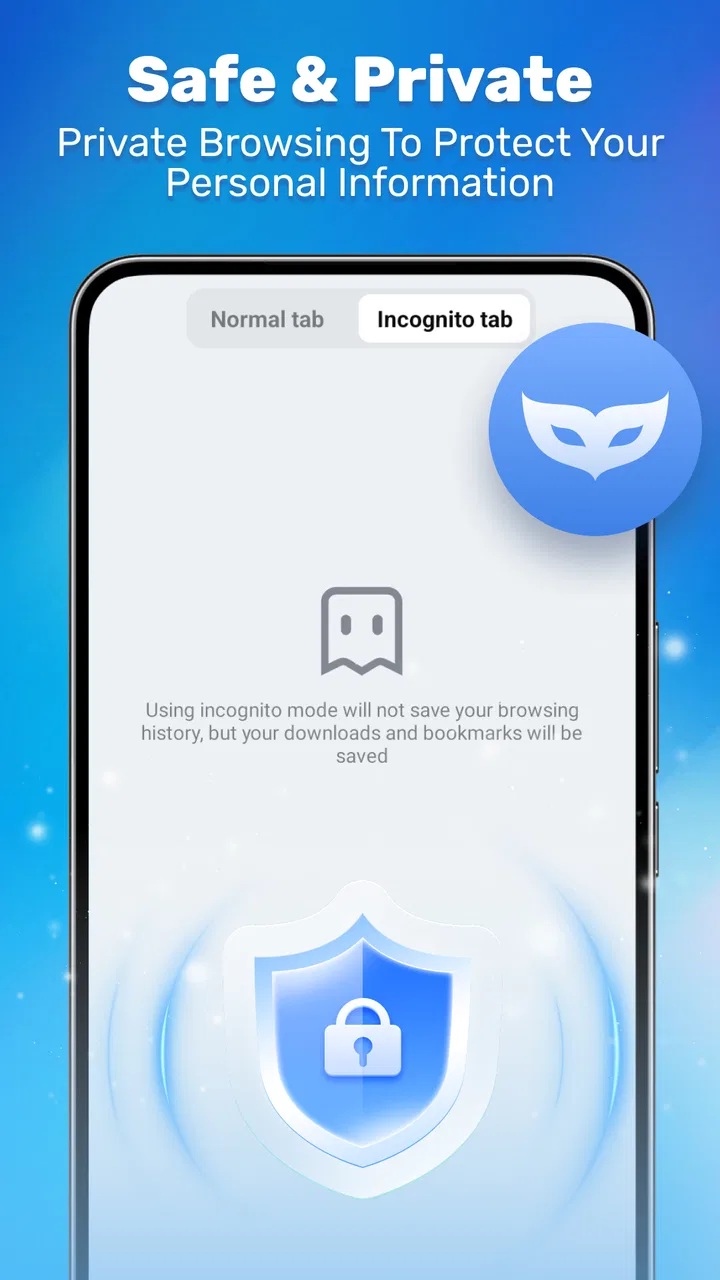
Privacy is part of the app’s identity, but I would not translate that single idea into an unlimited promise. Privacy can mean several things to different people: reducing exposure while browsing, keeping browsing activity more contained, or simply choosing an app that treats private use as a central concern. I see Go Browser as attractive to people who want that concern built into the browsing experience rather than added later through several separate tools.
At the same time, anyone with strict privacy requirements should examine the app’s behavior and settings directly on their own device before making it the only browser they use. I would not assume that a privacy-focused description automatically replaces a dedicated privacy workflow, a separate password manager, or a carefully configured network setup. The app can be part of a more cautious routine, but it should not encourage false confidence.
A realistic everyday scenario
Imagine I am preparing dinner while following a recipe. I search for an alternative ingredient, open the instructions, and then watch a short technique video. With Go Browser, those activities fit naturally into one place. I can return to the written steps instead of losing them among several applications, and the browser remains useful even when the video is only one small part of the task.
Another good situation is studying from a phone. I might read a definition, check a related explanation, and view a demonstration. The app’s value comes from reducing the mental overhead of switching tools. It is not a replacement for a full desktop research setup, but it can be a sensible companion when the phone is the main device.
I would be less enthusiastic for someone whose routine is mostly long-form video, professional web work, or constant multitasking across many tabs. In those cases, a dedicated browser with a mature synchronization system or a dedicated video app may offer a more specialized experience. Go Browser’s compact approach is useful precisely because it does not try to make every activity equally elaborate.
Device limits and installation expectations
The current version is 1.2.1, and the app runs on Android 8.0 or later. That gives it a reasonably broad compatibility range for Android users, but compatibility does not guarantee the same experience on every handset. An older phone may handle normal reading comfortably while struggling sooner with several media-heavy pages or extended video playback.
I would judge the app on the device where I actually plan to use it. A phone with limited free storage, modest memory, or many background applications may make any browser feel less consistent. The sensible test is to perform the tasks that matter to me: open the websites I visit regularly, play the type of video I normally watch, move away from the app, and return to it.
Resource demands also change with behavior. A single page containing text is a very different workload from multiple pages containing images, scripts, and video. I would avoid treating the app’s small, convenient concept as permission to keep every possible activity open at once. Closing pages I no longer need is a simple way to reduce clutter and make recovery easier.
The Teen content rating is worth noticing for families, although I would still use ordinary supervision for younger users. A content label is not a substitute for discussing safe browsing habits, links, accounts, and the kinds of websites a child should visit. Adults choosing the app for a teenager may appreciate the all-in-one format, but they should make the decision based on the young person’s actual browsing needs.
Where it beats the usual alternatives
Compared with using a standard browser plus a separate video application, Go Browser can feel more coherent for mixed tasks. I do not have to change context every time a written page points toward a clip. That is its clearest practical advantage, and it is more meaningful than simply saying that it has several functions.
Compared with a full-featured mainstream browser, the appeal is likely to be simplicity. A larger browser may be preferable if I depend on deep account synchronization, extensive extensions, advanced tab organization, or a desktop-like workflow. Go Browser is better suited to someone who wants a direct mobile tool and does not need every advanced option visible at all times.
Compared with a privacy-specialist browser, I would be more careful about choosing based only on the general privacy positioning. A specialist option may be a better fit for a person who has a very specific threat model or wants detailed control over privacy behavior. Go Browser is more approachable for everyday privacy-minded browsing, where convenience and a contained experience matter alongside caution.
There is also a subtle trade-off in consolidation. Having browsing and video together is convenient, but it means that one app becomes more central to several routines. If that app is unavailable, behaves poorly with a particular site, or simply does not match my preferred viewing workflow, I may miss the flexibility of separate alternatives. I would keep another browser available for unusual sites rather than forcing every task into one tool.
Who should install it, and who should skip it?
I would recommend trying Go Browser if I wanted a free Android tool for quick web searches, reading, privacy-conscious browsing, and occasional video playback. It is especially appealing to people who dislike jumping between apps for connected tasks. Students, casual researchers, and users with a simple phone-based browsing routine are the most obvious audience.
I would also consider it for an older compatible device, but only with sensible expectations. The Android 8.0 minimum makes installation possible on a wide range of phones, yet the real experience still depends on the handset and the complexity of the pages I open. A basic browsing routine is a better match than an ambitious, media-heavy one.
I would skip it as my primary choice if I need a highly developed desktop-to-mobile workflow, extensive browser customization, or a dedicated environment for long video sessions. I would also hesitate if my privacy needs require carefully documented, specialized controls rather than a convenient privacy-oriented experience. In those cases, the usual alternatives may be more appropriate even if they involve more apps.
My performance verdict
Go Browser earns its place by combining tasks that naturally belong together on a phone. In my experience, the idea works best when I browse first and use video as part of that browsing journey. The app’s perceived speed is most convincing during short, focused sessions, while heavier pages and prolonged media use deserve more conservative expectations.
Its stability should be judged through real routines rather than a single quick launch. I would test the sites I care about, keep active pages under control, and notice how easily I can recover after switching away. Those habits make the app more predictable and also reveal whether my device is the actual bottleneck.
The main reason to choose Go Browser is the balance between convenience, browsing, video, and privacy—not a promise that every demanding task will outperform a specialist alternative. The free price makes experimenting easy, and the current version gives Android users a straightforward way to see whether the combined workflow fits. My recommendation is positive for focused everyday use, with one qualification: keep a conventional or specialized alternative available if your browsing is unusually complex.
For me, that makes Go Browser a useful tool rather than a universal replacement. It is at its best when I want to search, read, watch a related clip, and move on without unnecessary friction. If that describes your routine, Go Browser - Safe & Fast is worth trying. If your priority is deep customization, professional multitasking, or intensive video consumption, I would choose a more specialized app instead.
FAQs for Go Browser - Safe & Fast
01What is Go Browser - Safe & Fast, and what can I use it for?
Go Browser - Safe & Fast is a lightweight mobile web browser designed for everyday internet use on Android and iOS devices. After exploring its main features, it appears focused on quick page loading, simple navigation, private browsing, tab management, and convenient access to websites from a compact interface. It may be suitable for users who want a straightforward alternative to larger browsers, especially on devices with limited storage or performance.
02Is Go Browser - Safe & Fast really secure for browsing the internet?
Go Browser - Safe & Fast includes features intended to make browsing more private and secure, such as private browsing options and protection against some unwanted web content, depending on the version and device. However, users should not assume that the browser provides complete anonymity or blocks every threat. Avoid entering sensitive information on suspicious websites, keep the app updated, and review its permissions and privacy policy before regular use.
03Does Go Browser - Safe & Fast block advertisements and trackers?
The browser may provide tools intended to reduce intrusive advertisements, pop-ups, or tracking elements, which can make websites feel cleaner and potentially improve loading speed. Performance can vary considerably between websites, and not every advertisement or tracker will necessarily be blocked. Some pages may also require certain content to be enabled. Check the browser’s settings to understand which blocking features are available in your installed version.
04Will Go Browser - Safe & Fast work well on older or low-storage phones?
One of the main reasons to consider Go Browser - Safe & Fast is its emphasis on being fast and lightweight. In testing, a simpler browser design can be helpful on older phones, devices with limited RAM, or connections that are not especially reliable. Nevertheless, speed depends on the website, network quality, background apps, and hardware. Large pages, video services, and complex web applications may still consume significant resources.
05What should I check before downloading Go Browser - Safe & Fast?
Before downloading, check that the application is compatible with your Android or iOS version and confirm the developer listed in the official app store. Read the current privacy information, requested permissions, recent user reviews, and update history. It is also worth checking whether features such as ad blocking, private tabs, downloads, and synchronization are included in your version, since availability and functionality may change after updates.
Pros
- Fast page loading
- even on many everyday mobile connections.
- Built-in ad blocking makes browsing cleaner and reduces visual clutter.
- Private browsing helps prevent local history and cookie storage.
- Simple interface is easy to navigate for first-time users.
- Uses less data than many feature-heavy browsers.
Cons
- Some websites may not work correctly when ads or scripts are blocked.
- Privacy features do not replace a VPN or full device-level protection.
- Limited extension support compared with major desktop-style browsers.
- Occasional pop-ups or promotional elements may affect the experience.
- Performance can vary noticeably on older or low-memory devices.

Go Browser - Safe & Fast
Gallery